

The Provost of the College of Health Sciences at Kwame Nkrumah University of Science and Technology, Kumasi (KNUST), Professor Christian Agyare, has called for the development of skilled professionals capable of linking science, policy, industry, regulation and public health practice to strengthen sustainable healthcare systems.
He made the remarks at the opening ceremony of a five-day short course on Health Technology Assessment (HTA) and Healthcare Industry and Regulatory Affairs (HIRA), organised by the Africa Health Collaborative in partnership with KNUST’s Office of the Vice-Chancellor and the Centre for Capacity Building and Innovation.
The programme, now in its fourth year, aims to build capacity in healthcare policy, regulation and technology assessment.
According to Prof. Agyare, effective healthcare systems depend not only on scientific discoveries but also on the policies, technologies and regulatory frameworks that shape healthcare delivery and access.
Addressing participants, he urged them to actively engage throughout the programme by sharing experiences, asking questions and building professional networks.
“The knowledge and skills you acquire here will not only benefit your professional development but will also contribute to strengthening healthcare systems and improving the lives of people and communities,” he said.
Prof. Agyare said the ultimate goal of health policy, regulation and technology assessment should be to improve healthcare outcomes while protecting the dignity and wellbeing of vulnerable populations.
“The future of healthcare belongs not only to those who innovate, but also to those who ensure that innovation is safe, effective, equitable, and accessible to all,” he added.
He later declared the programme officially open.
Dean of the School of Public Health at KNUST, Professor Peter Agyei-Baffour, said the strong participation reflected a shared commitment to improving healthcare systems, advancing innovation and promoting evidence-based decision-making.
He said the course was designed to encourage interdisciplinary collaboration and equip participants with practical knowledge relevant to their institutions and professional practice.
Prof. Agyei-Baffour described the programme as “more than an academic exercise,” saying it brought together diverse experiences and perspectives at a time when healthcare systems are rapidly evolving through digital technologies, emerging medicines and new management approaches.
He encouraged participants to use their varied professional backgrounds to enrich discussions and strengthen collaboration.
Dr. Daniel Opoku, coordinator of the short courses, expressed optimism about the programme’s long-term impact.

“It was encouraging to hear a participant express the desire to learn in order to teach others,” he said, adding that such enthusiasm could help sustain the initiative through future collaborations and facilitation support.
Dr. Opoku also highlighted the partnership between the Africa Health Collaborative, the Office of the Vice-Chancellor and the Centre for Capacity Building and Innovation at KNUST in organising the programme.

Professor Kofi Akohene Mensah, Lead of the Health Employment Pillar, assured participants that they would leave the programme with practical skills and knowledge applicable in their institutions and healthcare facilities.
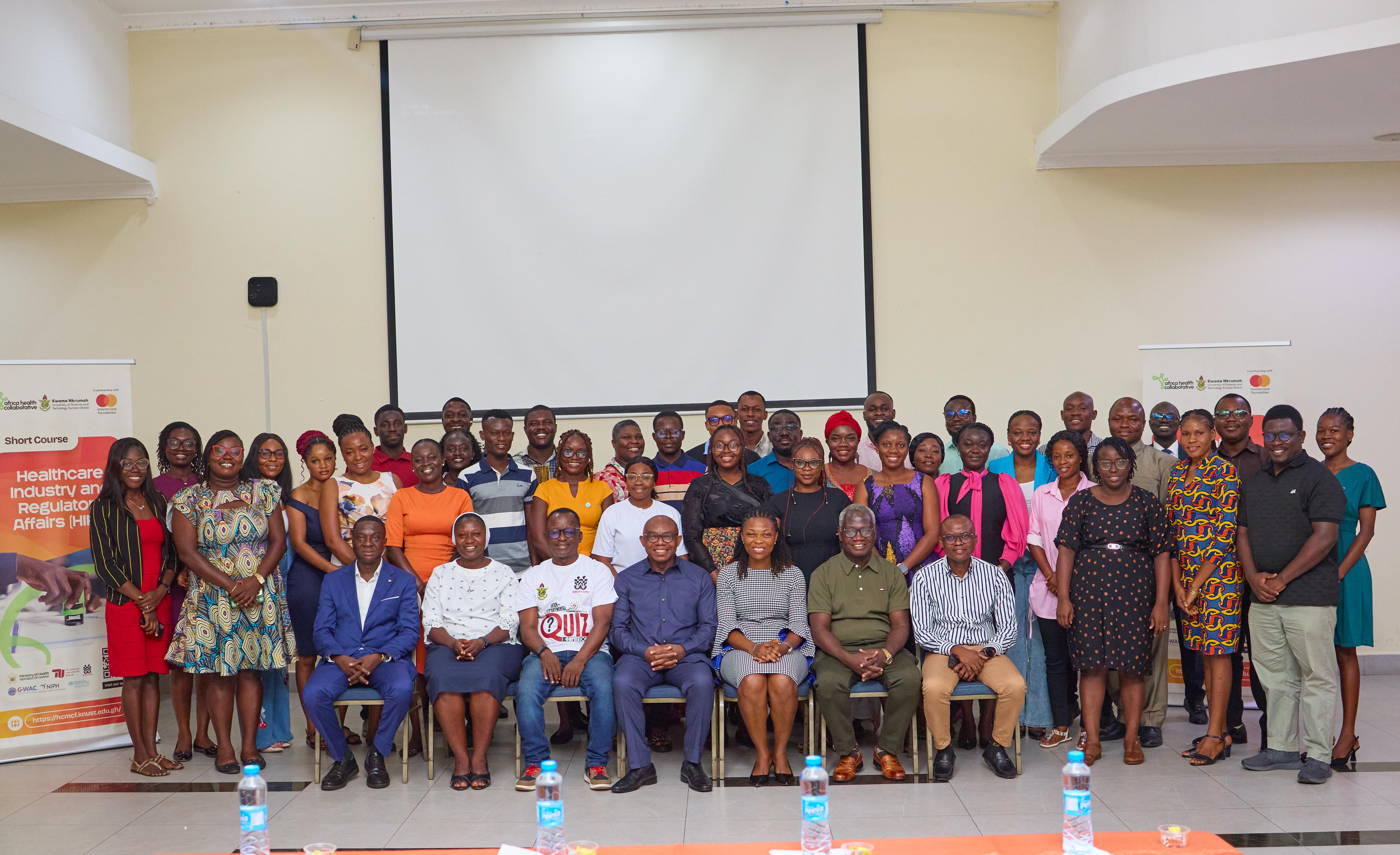
He added that participants would also earn Continuous Professional Development (CPD) points through the training programme.


